Showing posts with label pharmacists. Show all posts

Saturday, 7 February 2026

International pharmacy body, national associations win backing from governments to develop new African College of Pharmacists


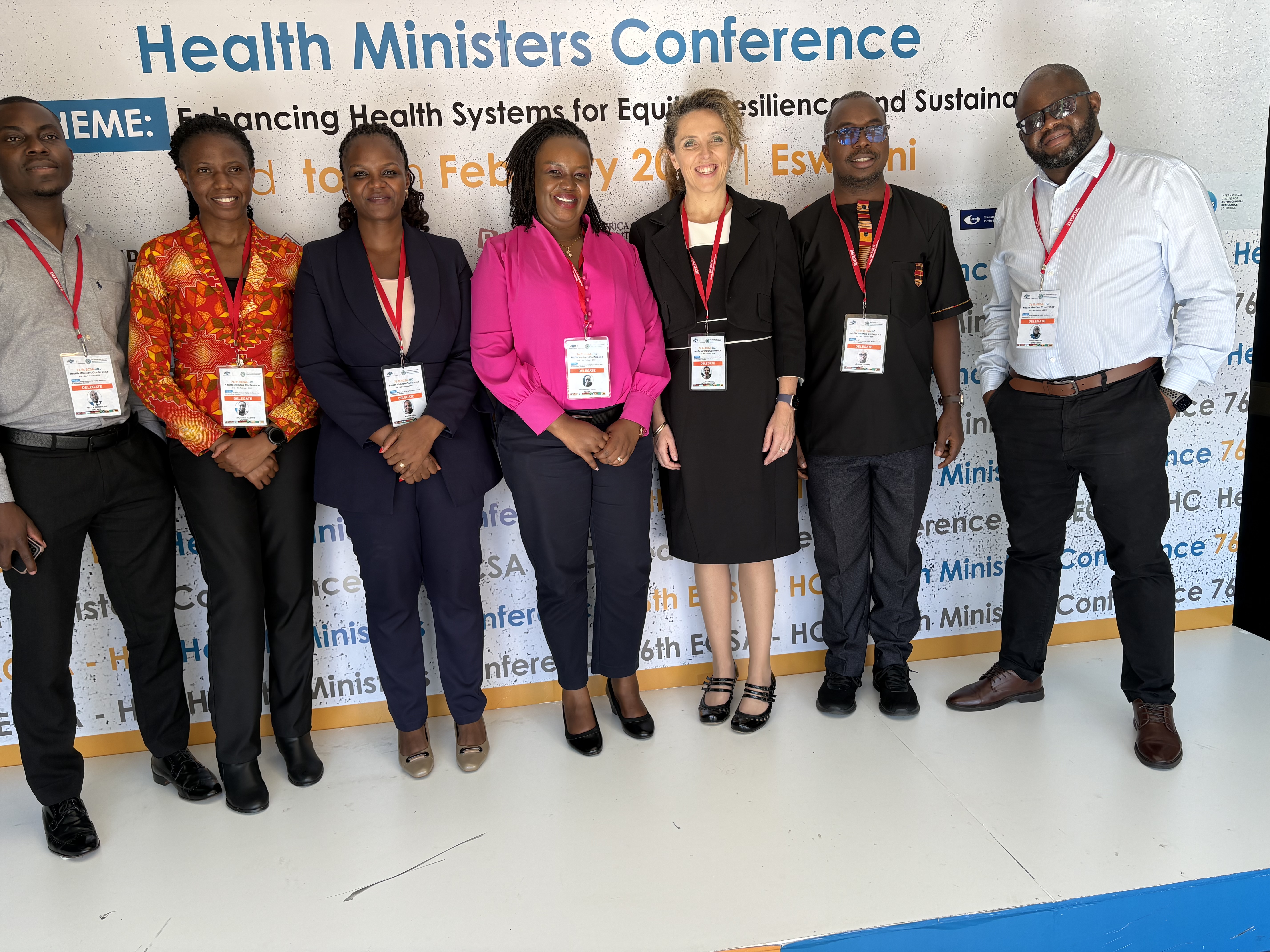
The Commonwealth Pharmacists Association (CPA) and the National Pharmacy Associations (NPA) of six African countries celebrated last Thursday evening after Ministers attending the 76th Health Ministers Conference of the East, Central and Southern African Health Community (ECSA-HC) formally adopted a resolution that promises to pave the way for the creation of an ECSA-HC College of Pharmacists.

Representatives of CPA and the NPAs of Tanzania, Uganda, Zimbabwe, Malawi, Kenya and host country Eswatini – all members of the CPA – presented a proposal to Health Ministers from the nine ECSA-HC member states who gathered in Eswatini, seeking their backing to draw up a detailed proposal for the formation of a postgraduate training centre for pharmacists working in the region. Ministers subsequently adopted a resolution which includes authorisation for ECSA-HC’s Secretariat to work with CPA and other key stakeholders on the development of a comprehensive proposal for how the College could be formed and supported.

The creation of such a College would represent a significant advance in workforce training in the nine ECSA countries. Although similar colleges already exist to serve the postgraduate training needs of nurses and surgeons among others, no such provision exists for pharmacists, who across Africa play a unique and vital role in healthcare systems as the first point of contact for many patients – particularly those on low incomes or in hard to reach communities.

It would also bring the ECSA-HC region into alignment with its neighbours. Across West Africa, nearly 600 professionals have benefited from advanced training by the WAHO West African Postgraduate College of Pharmacists since its creation in 1997. WAHO has also been able to use its College to support the development of new schools of pharmacy for undergraduates in countries like Sierra Leone, strengthening workforces and creating skilled employment opportunities for young health professionals.

If successfully established, the ECSA-HC College of Pharmacists would provide work-based advanced training opportunities to train pharmacists in advanced skills. Initially, the College will focus on training pharmacists in advanced leadership and practice skills needed to champion effective antimicrobial stewardship (AMS) – measures that can be taken to tackle antibiotic resistance, a health crisis that threatens to take millions of lives across Africa by 2050 without urgent intervention. International collaboration between ECSA-HC member states will be an essential ingredient of the College’s working model, taking advantage of each country’s strengths and being mindful of each nation’s challenges.

The initial offering will draw upon CPA’s expertise as a globally recognised training provider for pharmacists that has also led multiple high impact AMS training programmes across eight African countries since 2019, training almost 30,000 healthcare workers on the ground and providing digital resources for over 100,000 users with the backing of the UK’s Fleming Fund. Tackling antibiotic resistance is an area where pharmacist leadership – as clinicians who are experts in the safe, effective and sustainable use of medicines – has been shown to be critical.

Similar Fellowship offerings by CPA as part of these programmes have already had a significant impact. At one hospital in Kenya, a CPA pharmacy leadership trainee increased adherence to antibiotic best practice in pre-surgical treatment from just 20% of patients to almost 90%. In Uganda, CPA interventions saw over 80% of patients benefit from targeted therapy, helping cut order times for certain life saving emergency antibiotics from every two weeks to every two months. CPA hopes that an ESCA-HC College of Pharmacists will be able to drive similar pharmacist-led improvements across the region in a sustainable and cost-effective way.

After the resolution was formally adopted by Ministers, CPA and its national partners gathered in Ezulwini for a ceremonial counter-signing of the ministerial resolution, affirming their commitment to carrying through the project and working in partnership to make the College a reality.

Beth Ward, CPA’s Strategic lead for Workforce Capability Building, told That's Health: “We are thrilled and grateful that ECSA Health Ministers have recognised the impact that a College of Pharmacists would have on the region. Pharmacists have an absolutely critical role to play in tackling public health threats like antibiotic resistance and in managing many of the non-communicable diseases that increasingly challenge ECSA communities, but have limited access to the kind of advanced training opportunities available to doctors and nurses despite being on the frontline of patient care. The College would bring training opportunities in leadership, advanced skills and clinical expertise in line with other professions, driving improvement across health systems and strengthening the safe, effective, and sustainable use of life-saving medicines.”

Gift Chakera, President of the Pharmaceutical Society of Zimbabwe, said: “The 76th ECSA-HC Health Ministers Conference represents a huge milestone moment for our profession. CPA’s successful advocacy efforts to secure endorsement for the establishment of a Regional College of Pharmacists will harmonise training and recognition across ESCA countries, ensuring consistent competencies for AMR management, and will facilitate cross-border collaboration in surveillance and regulation. We congratulate CPA on their advocacy efforts and offer our sincere gratitude to the ECSA-HC Health Ministers and all supporting partners.”

William Mpute, President of the Pharmaceutical Society of Malawi, said: “A specialised pharmacy workforce will play an integral role in delivering optimal pharmaceutical care to Malawians and contribute to the efforts of the Malawi government in achieving Universal Health Coverage. An ESCA-HC School of Pharmacists offers an effective means to address the current and future needs in the pharmaceutical sector and the health sector at large.”

With Ministerial backing for the idea secured, the next step for the proposal’s champions is to develop a concrete framework for the College’s structure, educational offering and funding mechanisms, working in partnership with the ECSA-HC Secretariat to do so.

https://commonwealthpharmacy.org

Saturday, 27 December 2025

Global Pandemic Preparedness and Response report identifies critical need to expand pharmacy’s role in health emergency response

On the United Nations’ International Day of Epidemic Preparedness (27th December), an international body representing over one million pharmacists across the globe has published a report on Pandemic Preparedness and Response, calling on healthcare leaders and policymakers to urgently expand pharmacists’ roles in emergency preparedness and response strategies.

The report has been developed by the Commonwealth Pharmacists Association - the international body of the national pharmacy associations of Commonwealth of Nations member states - and utilises case studies from the COVID-19 pandemic to call upon governments to recognise pharmacy’s importance in safeguarding national and international health security as they seek to minimise the risk of future pandemics and tackle them as they arise.

Examining pharmacists’ role in tackling COVID-19 in countries in seven countries in North America, the Caribbean, Europe, Africa, and Southeast Asia*, the report concludes that, although pharmacists in each of these countries contributed significantly to pandemic response, they are also a largely untapped resource capable of strengthening health systems and preventing pandemic-related deaths with better representation in national emergency frameworks and decision-making processes.

The Report identifies four key systemic barriers preventing the potential of the pharmacy workforce in pandemic preparedness from being realised:

the exclusion of pharmacists from the policymaking level of emergency preparedness and response;

a lack of formal recognition of the roles they play in this field;

insufficient training and professional development opportunities for pharmacists in areas such as vaccine delivery, infection prevention and control, and disaster management;

structural deficiencies that prevent pharmacists from maintaining continuity of care during crises.

The report emphasises a need to advocate for stronger integration of pharmacists at all levels of pandemic preparedness and response alongside policy reform to consolidate this, as well as financial investment in pharmacy-specific training programmes and advanced digital health infrastructure.

Grace Grange, Research Officer at the Commonwealth Pharmacists Association and principal author of the Pandemic Preparedness and Response report, told That's Health: “Pharmacists were essential to the COVID-19 response, yet they are too often excluded from emergency planning. If we are serious about strengthening pandemic preparedness, pharmacists must be embedded in health emergency frameworks. 

"This report presents clear evidence of their vital contributions from the COVID-19 pandemic and sets out practical recommendations that recognise integrating pharmacists as essential to future health emergencies.”

Dr Amy Chan, Senior Research Advisor at the Commonwealth Pharmacists Association and co-author of the Pandemic Preparedness and Response report, added: “Pharmacists are the first line of defence in pandemic preparedness. As the health professional who is most accessible to our communities, they bring trusted health and medicines expertise in times of crisis to foster real-world resilience. This report highlights the important roles that pharmacists can play, and includes learnings from the pandemic to shape further growth of this role to improve the health of our nations."

Kwabena Asante Offei, Vice-President of the Commonwealth Pharmacists Association and contributor to the Pandemic Preparedness and Response report, said: "Pharmacists are highly trained health professionals who are within reach of community members and work within systems with the agility needed to mobilise and respond to emergencies. 

"Their integration into preparedness and response planning is essential if we are to reach more people, in more places, when emergencies occur. The COVID-19 pandemic demonstrated clearly that pharmacists are not peripheral to emergency response — they are essential. This report captures those lived experiences and underscores why strengthening the role of pharmacists protects communities and builds resilient health systems that can respond effectively to future crises."

Sunday, 12 October 2025

Barcode errors on UK medicine packs are putting patient safety at risk, warns leading pharmacist, as petition calls for MHRA action

A growing number of medicines in UK pharmacies carry incorrect or duplicate barcodes, forcing pharmacists to manually verify every pack before dispensing to their patients.

In an opinion piece published this week in Chemist+Druggist, Zeinab Ardeshir, Superintendent Pharmacist and Co-founder of PillSorted, has called on the Medicines and Healthcare products Regulatory Agency (MHRA) to take urgent action to prevent these errors.

“We are seeing packs from different manufacturers carrying the same barcode. It means a simple scan no longer guarantees accuracy. Every pharmacist must now double-check by hand, and it’s a hidden safety risk that should not exist in 2025,” Ardeshir told That's Health.

“A single, enforceable fix would solve this nationwide: making the GTIN barcode part of the medicine’s marketing authorisation file. That would give manufacturers and regulators joint responsibility for accuracy, protecting patients and saving pharmacies thousands of hours in manual checks.”

Ardeshir and her team have launched an open campaign at barcode.pillsorted.com, documenting real examples of barcode mismatches and calling for public support. The campaign urges the MHRA to make accurate GTINs a mandatory component of medicine approval in the UK.

The issue affects every community pharmacy, hospital, and dispensing system using scan-to-label or digital checking workflows. While individual pharmacists routinely catch these discrepancies before harm occurs, experts warn that relying on human vigilance is not sustainable in a system handling millions of packs each and every week.

The campaign has already attracted strong engagement across the pharmacy sector, with calls for NHS England, GS1 UK, and MHRA to collaborate on enforcement standards.

FACTFILE:

PillSorted is a Cambridge-based digital healthcare service providing high-precision medication management and treatment pathways for patients across the UK. 

Founded by clinicians, including pharmacists and doctors, the company combines technology with clinical care to improve medication safety and adherence. PillSorted works seamlessly across NHS and private care, adapting to how patients access treatment.

https://www.pillsorted.com

Thursday, 25 September 2025

Commonwealth Pharmacy body joins United for Self-Care Coalition​

The United for Self-Care Coalition is proud to announce that the Commonwealth Pharmacists Association (CPA) have joined the Coalition as a new member. 

This strategic partnership brings the expertise and reach of pharmacists across 56 Commonwealth nations, many of which are Low- and- Middle Income Countries (LMICs), to a global initiative dedicated to advancing self-care as a key pillar of universal health coverage (UHC).

The CPA, an accredited Commonwealth organization, is uniquely positioned to advance health and well-being through strengthening health systems through workforce development, equitable access to medicines, and pharmacist-led primary health care. 

Their work is a natural fit with the Coalition’s mission to empower individuals and strengthen health systems by integrating self-care into national health policies and strategies.

“We are delighted to welcome the Commonwealth Pharmacists Association to our Coalition,” Greg Perry, Director-General of the Global Self-Care Federation (GSCF), one of the founding members of the United for Self-Care Coalition, told That's Health. 

“Pharmacists are key in empowering people to manage their own health more effectively and truly embed selfcare into their daily routines. The CPA’s extensive network will be invaluable in driving the adoption of self-care interventions in some of the world’s most vulnerable communities, contributing to the achievement of UHC globally.”

Victoria Rutter, the CEO of the Commonwealth Pharmacists Association added, “Our mission is to empower and develop the pharmacy profession to strengthen health systems and improve access to pharmacy services and improve quality of care. Joining the United for Self-Care Coalition provides a powerful platform to further this mission. 

"We believe pharmacists, particularly in LMICs, are often the most accessible and trusted health professionals in their communities. Leveraging their full scope of practice is essential to meeting population health needs and advancing UHC.”

The United for Self-Care Coalition is a global alliance of like-minded organisations dedicated to the common goal: to achieve universal health coverage through codifying self-care as a critical component of the self-care continuum, particularly in the context of managing NCDs.

https://commonwealthpharmacy.org