Showing posts with label Myalgic Encephalomyelitis. Show all posts

Tuesday, 14 July 2026

Declan Rice's Illness Highlights the Importance of Rest After Viral Infections

Declan Rice's determination has reignited discussion about post-viral illness, M.E. and why adequate rest during recovery could help prevent long-term health complications.

England midfielder Declan Rice, still recovering from a virus, played 45 minutes in 33+ degree heat during the Quarter Final match against Norway on Saturday night. 

Fans noted he was clearly struggling and wished him well on social media. 

His commitment was widely praised, but for people living with post-viral illness and Myalgic Encephalomyelitis (M.E.), the moment was deeply concerning.

When a national figure pushes through illness in extreme conditions, it reinforces a powerful cultural message: that exertion during or after viral infection is harmless, even admirable. For many people, it is not. For some, it leads to lifelong disability.

This moment exposes a critical failure in UK public health communication, specifically the Chief Medical Officer’s physical activity guidance, published on Friday, which encourages staying active but does not include clear caveats about post-viral instability, risk, or Post-Exertional Malaise (PEM). Without these caveats, the public is left with dangerously incomplete advice.

One of the most damaging myths surrounding M.E. is that it affects only certain types of people. In reality, M.E. can strike anyone:

children and adults

men and women

people of every racial and ethnic background

elite athletes and people with sedentary lifestyles alike

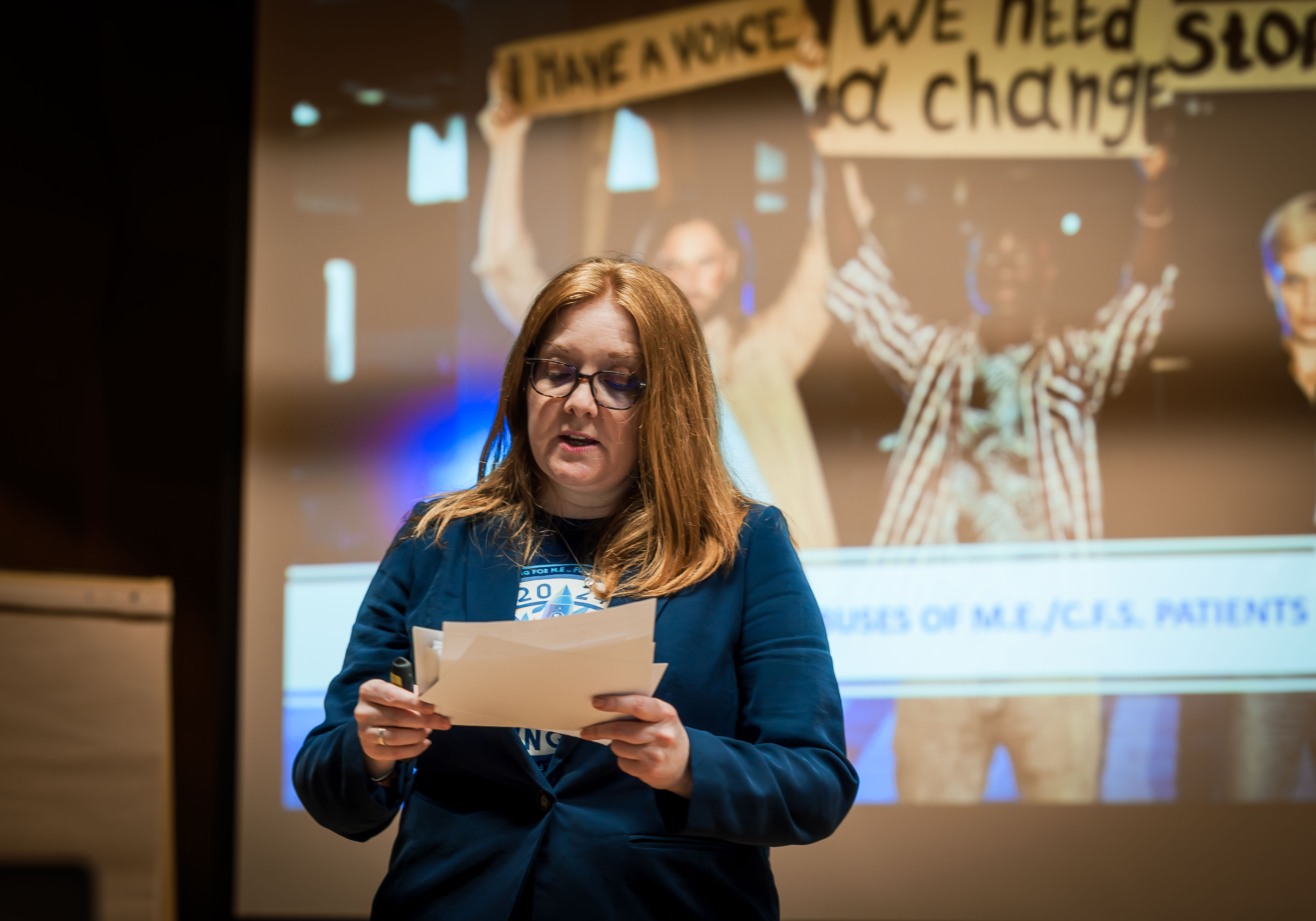
Sally Callow, (PICTURED) Founder of social enterprise ME Foggy Dog, told THat's Health: “Viruses don’t care who you are, what you do for a living, or how fit you might be. You’re not being tough by fighting back against an infection, you’re putting yourself at risk. 

"The best chance anyone has of a full recovery, or of avoiding worsened long‑term complications, is to rest far more than they think they need. That message must be made clear to the public.” 

Physical fitness does not protect against post-viral illness. Many hundreds of thousands of people in the UK developed M.E. after “pushing through” viral infections, unaware of the risks. We sincerely hope Declan Rice makes a full recovery despite overexerting while still symptomatic. Many others did not.

Across the M.E. community, people describe remarkably similar experiences. Before diagnosis, they did not know what PEM was, did not realise everyday activities counted as exertion, and did not understand that rest was protective. Many assumed exertion meant only sport or exercise, not showering, commuting, studying, or housework. They followed general public health advice, usually offered by healthcare professionals, to stay active, unaware that it could worsen their condition.

These stories are not isolated. They are representative of the wider M.E. community, which has been consistently harmed by missing public health caveats.

People who meet diagnostic criteria for M.E. but remain undiagnosed are extremely difficult to reach. They are not in specialist clinics or patient groups. They are not reading M.E.-specific resources. They are simply trying to recover from a virus, following general public health advice, advice that currently lacks the clear, publicly communicated, caveats they urgently need.

This is precisely why an official public messaging campaign is essential. Without it, misinformation spreads easily. Harmful “push through it” narratives dominate. People unknowingly worsen their condition. Early intervention opportunities are lost and preventable disability becomes common.

The absence of clear, authoritative messaging creates a vacuum, and that vacuum is filled with confusion, contradictory advice, and cultural pressure to stay active at all costs.

The UK Chief Medical Officer’s physical activity guidance promotes movement and activity,  but without any publicly communicated caveats about post-viral illness, PEM, or the risks of exertion during recovery. This omission leaves the public vulnerable.

Victorian-era public health campaigns understood something modern messaging has forgotten: rest is medicine. Rest is a legitimate, evidence-based intervention during and after viral illness.

The public needs clear, accessible information about PEM, a delayed worsening of symptoms 24 to 72 hours after physical, cognitive, or emotional exertion. PEM is not normal tiredness; it is a pathological response. Everyday activities count as exertion. Stepping back from life early can mean the difference between recovery and lifelong disability.

This is not specialist or niche medical knowledge; it is fundamental public health information that must be embedded in national guidance. At present, an estimated 1.3 million people in the UK meet the diagnostic criteria for M.E., and every one of them experiences Post‑Exertional Malaise. Yet many remain unaware of what PEM is or how it affects them, largely because gaps in clinical understanding mean their GPs have never explained it.

In the absence of clear caveats from the UK’s Chief Medical Officers, the public is left with dangerously incomplete guidance. 

A national public health campaign is urgently needed, one that explains post-viral illness and PEM in simple terms, emphasises the benefits of rest, teaches people to recognise early warning signs, challenges harmful cultural narratives about “pushing through,” and ensures that healthcare professionals and the public understand that overexertion can cause long-term harm. 

Crucially, such a campaign must reach undiagnosed people, who are currently invisible to the system and at greatest risk.

This campaign must be as visible and culturally embedded as Victorian-era rest messaging,  because the stakes are just as high.

When a national hero plays through illness in extreme heat, millions see it as strength. But for those at risk of post-viral illness, it models behaviour that can lead to permanent disability.

We cannot continue to celebrate endurance while ignoring the science of post-viral harm.

The UK needs a public health messaging overhaul, one that protects people, prevents avoidable disability, and ensures that no one loses their health simply because they were never told to rest.

http://www.mefoggydog.org

Sunday, 7 June 2026

Charge of the Light Brigade! Light Protest Calls Out Government Over the Neglect of People With Very Severe Myalgic Encephalomyelitis (ME)

The most severely ill people with ME have sent images to light up London because the Health Secretary has left these patients in the dark.

#MEAction UK projected messages onto locations in central London on 3rd June 2026 to urge James Murray, the Health Secretary to establish specialised NHS services for the most severely affected Myalgic Encephalomyelitis (ME) patients.

The very severely ill are often bed bound, tube fed and live in the dark, isolated from life with a lower Quality of Life score than other major diseases, including heart failure and cancer.

The tragic deaths of Maeve Boothby O’Neill, Sophia Mirza, Merryn Crofts, Kara Jane Spencer, Ella Copley, illustrate how medical care for the very severe is non-existent. The coroner at Maeve Boothby O’Neill’s inquest said, ‘that provision of care for patients with severe ME such as that which Maeve suffered from was and is non-existent’.

"The most severely ill people with ME have sent images to light up London because the Health Secretary has left these patients in the dark. The sickest ME patients are dying without specialised care. We need action now" said #MEAction UK Chair Denise Spreag.

Lizzy who has had ME since she was 14 said, "I have had ME for 17yrs, since I was 14, and despite remaining positive, there is no denying how much I have lost to it. Moments with family, life events that only come around once, my independence, mobility, my hobbies, hopes, voluntary work. A career, relationships, even my ability to digest foods.

"We have faced stigma, lack of specialist medical care, and medics from other specialties having to step in to try to help before it’s too late. I have so much to give, so many skills, interests, so much knowledge, and drive, if only I was well enough to apply it fully. We deserve better."

Another very severe ME sufferer, ‘C’ said, "33 years like this. No medical help, whatsoever, too ill to see family or friends. It could have been so different!"

The decision to set up this service lies with James Murray, the Secretary of State for Health and Social Care. #MEAction UK calls on the Health Secretary to stop stalling and start the service.

As someone who suffered from ME for a decade but who had a spontaneous recovery, my heart goes out to people suffering from Very Severe Myalgic Encephalomyelitis.

https://meaction.org.uk

Monday, 19 January 2026

Cost-Saving Shift to Social Prescribing Lacks Essential Safety Data for M.E.

As the UK government accelerates its national transition toward non-pharmacological treatments (NPTs) and social prescribing in 2026, social enterprise ME Foggy Dog is highlighting a critical lack of oversight regarding patient safety. 

While these community-based interventions are being promoted as a "personalised care" solution, the organisation warns that the shift is primarily driven by cost-saving measures rather than clinical safety data. 

Since 2020, the UK has seen a surge in M.E. (Myalgic Encephalomyelitis), Long Covid, and other post-viral conditions. In response, the 2026 policy direction leans heavily on "low-cost" alternatives to biomedical research and pharmaceutical interventions. 

However, ME Foggy Dog argues that this financial strategy overlooks the biological reality of energy-limiting conditions. "NPTs are being scaled nationally because they are inexpensive, not because they have been proven safe for the M.E. community," Sally Callow, Founder of ME Foggy Dog, told That's Health. 

"Biomedical research and specialist care require significant investment, but diverting patients toward community activities without clinical safeguards is a false economy that risks long-term health deterioration." 

Despite the rapid rollout of social prescribing, there remains no mandatory training for link workers or community providers regarding Post-Exertional Malaise (PEM), the core symptom that makes many physical or mental activities potentially harmful for M.E. patients.

Crucially, while patients have reported health setbacks through PALS and individual NHS clinics, there is still no national system to centrally record harms caused by non-medical interventions. This lack of data was highlighted during the 2021 NICE guideline review and remains unaddressed in 2026.

Through the Shake It Up campaign, ME Foggy Dog is calling for:

National transparency: The urgent creation of a national harm-reporting system to track the impact of NPTs.

Evidence-based policy: An end to ill-informed policymaking, ensuring that any expansion of social prescribing is informed by recorded patient outcomes.

"We are at a critical moment where policy is being built without a safety net," Callow continues. "If the government wants to expand these programmes, it must commit to tracking the consequences. We need influence, policy insight, and amplification to ensure the M.E. community is protected, not sidelined by budget-driven decisions."

Monday, 8 April 2024

Exploring Treatment Options for Myalgic Encephalomyelitis/Chronic Fatigue Syndrome (ME/CFS)

Living with Myalgic Encephalomyelitis, also known as Chronic Fatigue Syndrome (ME/CFS), can be an arduous journey. ME/CFS is a complex and debilitating condition characterised by extreme fatigue, post-exertional malaise, sleep disturbances, cognitive impairments, and other symptoms. 

While there is no cure for ME/CFS as yet, there are various treatment approaches aimed at managing symptoms, improving quality of life, and promoting overall well-being for patients. In this blog post, we'll explore some of the treatments available for individuals coping with ME/CFS.

Lifestyle Management:

Pace and rest: One of the key strategies for managing ME/CFS is pacing activities to avoid overexertion. Learning to balance activity and rest is crucial to prevent symptom exacerbation.

Sleep hygiene: Establishing good sleep habits can help improve the quality of sleep for ME/CFS patients. This may involve maintaining a regular sleep schedule, creating a relaxing bedtime routine, and optimizing the sleep environment.

Stress management: Stress can worsen symptoms of ME/CFS. Techniques such as mindfulness, meditation, and deep breathing exercises can be helpful in managing stress levels.

Dietary and Nutritional Support:

Balanced diet: Eating a well-balanced diet rich in fruits, vegetables, whole grains, and lean proteins can support overall health and energy levels.

Supplements: Some ME/CFS patients may benefit from certain supplements, such as vitamin D, magnesium, and Coenzyme Q10. However, it's important to consult with a healthcare professional before starting any new supplements.

Medications:

Symptom management: Medications may be prescribed to alleviate specific symptoms associated with ME/CFS, such as pain, sleep disturbances, and depression.

Off-label treatments: Certain medications that are not specifically approved for ME/CFS, such as low-dose naltrexone or antiviral drugs, have shown promise in some patients. However, more research is needed to determine their efficacy and safety for ME/CFS.

Cognitive Behavioral Therapy (CBT) and Graded Exercise Therapy (GET):

CBT: This type of therapy focuses on changing negative thought patterns and behaviors that may exacerbate symptoms of ME/CFS. It can help patients cope with the psychological impact of the illness and develop effective coping strategies.

GET: Under the guidance of a trained therapist, GET involves gradually increasing physical activity levels in a structured manner. It aims to improve physical function and tolerance to activity over time.

Alternative Therapies:

Acupuncture: Some ME/CFS patients report benefits from acupuncture in relieving pain and improving overall well-being.

Mind-body practices: Techniques such as yoga, tai chi, and qigong may help reduce stress, improve sleep quality, and enhance physical function in individuals with ME/CFS.

Conclusion:

Living with Myalgic Encephalomyelitis/Chronic Fatigue Syndrome presents numerous challenges, but with a comprehensive treatment approach, patients can better manage their symptoms and improve their quality of life. It's essential for individuals with ME/CFS to work closely with healthcare professionals to tailor a treatment plan that addresses their unique needs and preferences. While there is still much to learn about this complex condition, ongoing research and advances in treatment offer hope for a brighter future for those affected by ME/CFS.

I should point out that I suffered with ME for a number of years after having contracted glandular fever. It's unfortunate that 30 years on there is still no cure.