Tuesday, 27 January 2026

New survey highlights life-changing impact of Chilterns Neuro Centre support

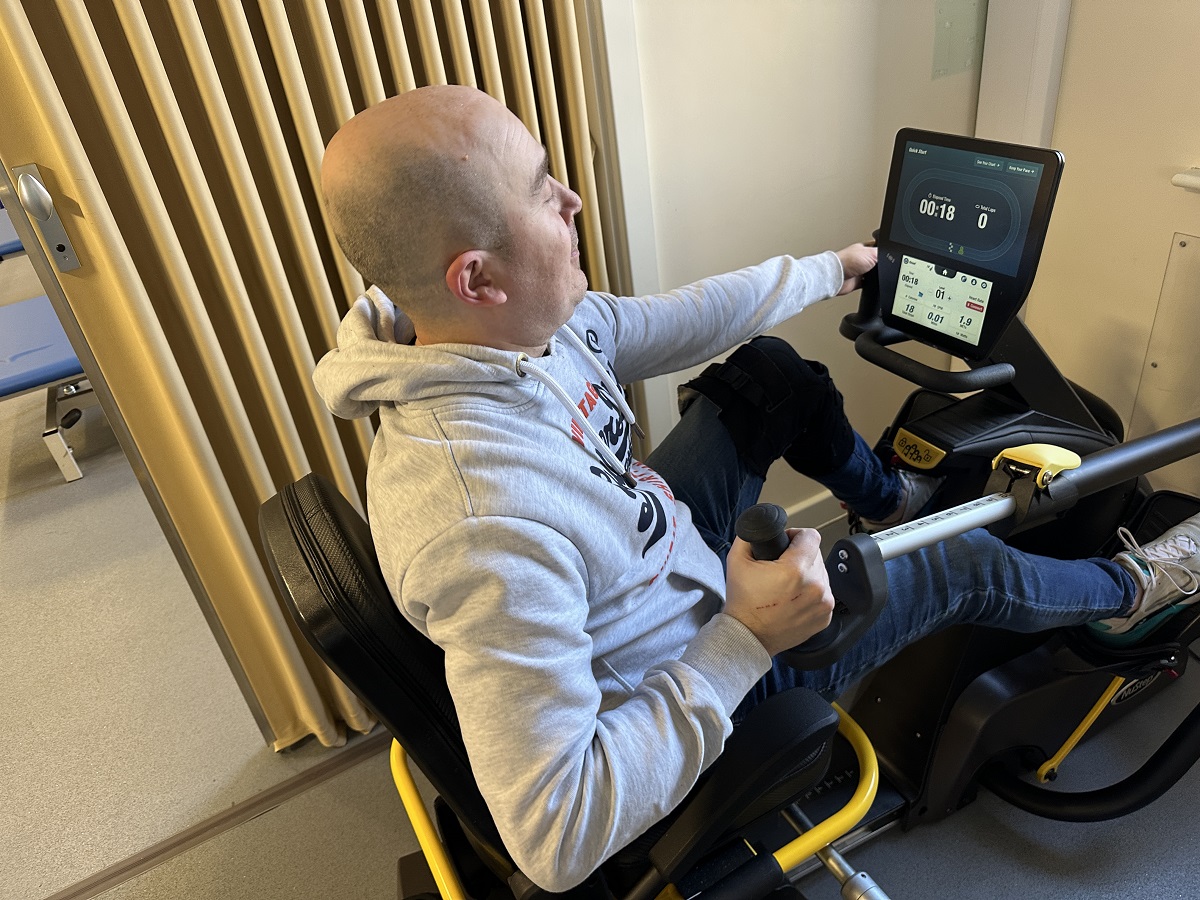
A new survey of members at the Chilterns Neuro Centre has highlighted the vital and often life-changing difference the charity makes to people affected by neurological conditions in the local community.

Almost 300 members took part in the Centre’s annual membership survey, representing just under a third of its total membership. An overwhelming 99% of respondents said they would recommend the Centre to someone with a neurological condition or their carer, with the vast majority saying they would be extremely likely to do so.

The Chilterns Neuro Centre is a Wendover-based charity providing a wide range of treatments and services to people affected by MS, Parkinson’s and strokes, as well as their families, empowering them to live life to the full. Other than a £35 annual membership fee, all these services are provided free of charge. 

However, as a charity, the Centre relies heavily on the generosity of individuals and organisations within the community to help maintain its vital services.

Importantly, 95 percent of respondents stated that the Centre provides services they cannot access anywhere else, reinforcing its distinctive role in filling gaps in statutory health and social care provision.

The survey findings shows the Centre’s specialist services play a absolutely vital role in helping people manage the long-term impact of conditions such as MS, Parkinson’s and stroke. Exercise classes, one-to-one physiotherapy and courses and workshops were the most frequently accessed services, underlining the importance of ongoing, specialist physical support for people living with these conditions.

Members also reported significant benefits to their health and wellbeing. Almost nine in ten said the treatment and support they receive helps improve their physical health always or most of the time, while a similar proportion said it improves their mental health and helps them manage their symptoms. More than four in five said the Centre helps them maintain their independence in daily activities, and three quarters said it increases social contact and helps reduce loneliness.

The survey also highlights the compassion and professionalism of the Centre’s staff, with 88 percent of respondents rating staff support and friendliness as excellent and a further 11% rating it as good.

Members’ comments vividly capture the difference the Centre makes. One described it simply as “my lifeline”, while another said: “After my diagnosis I felt very isolated and alone, but the Centre has given me hope again.” Others spoke of feeling understood, supported and part of a community where their condition does not need to be explained.

“These results show just how essential the Centre is to so many people living with neurological conditions and their families,” Richard Parkin, Chief Executive of the Chilterns Neuro Centre, told That's Health.

“We are incredibly proud of the impact our staff, volunteers and supporters make every day, providing specialist support, friendship and hope in a safe and welcoming environment.”

If you or someone you know has MS, Parkinson’s, or has experienced a stroke, the Chilterns Neuro Centre can help. Call 01296 696133 to learn more about their services and how to get involved.

New national campaign encourages victim-survivors of domestic abuse to make use of ‘Safe Spaces’ this winter

Crisis support charity, Hestia, has launched a new national billboard campaign, made possible thanks to the JCDecaux Community Channel, highlighting the different forms of domestic abuse and how risk can escalate gradually over time. 

The campaign is backed by high street banks and pharmacies including: AIB (NI), Boots, Cooperative Bank, Medicare, Metro Bank, Morrisons, Nationwide, NatWest, Progressive Building Society, Royal Bank of Scotland, Santander, TSB, Ulster Bank and more. 

It aims to raise awareness of the thousands of designated Safe Spaces in their high street branches for victim-survivors of domestic abuse. Charities and police forces often report an increase in domestic abuse incidents over the winter months, as conditions surrounding the holidays, such as heightened alcohol consumption, financial stress and tensions due to family gatherings, can create an environment where abuse is more likely to occur.

This makes it even more crucial that victim-survivors know where to seek help safely. Some banks participating in the Safe Spaces scheme have also noted an increase in usage of Safe Spaces during winter months.

The powerful, impactful campaign is appearing on billboards and on high streets in key cities across the UK (including London, Birmingham, Edinburgh and Manchester). The campaign was created and produced by Toaster, an international creative agency with an HQ in London.

The Safe Spaces scheme, originally launched by Hestia during the pandemic as part of its UK Says No More campaign, can be accessed by asking a member of staff at a participating location to use their Safe Space. 

Victim-survivors are then shown to a private room equipped with a phone or tablet, providing a safe and discreet way to reach out to friends and family, contact specialist support services and start their journey to recovery. Visit www.hestia.org/safe to find your nearest Safe Space.

Patrick Ryan, Chief Executive at Hestia told That's Health: “Winter can be a particularly dangerous time for those experiencing domestic abuse. More time at home, financial pressures, and higher alcohol consumption can increase isolation and risk, while access to support services may be limited".

“That’s why Hestia is launching this campaign to promote Safe Spaces, places where anyone feeling unsafe can escape, and find the support they need. Everyone deserves to be safe; no one should suffer in silence.”

Chris Dooley, Head of Responsible Media at JCDecaux UK, said: “At a time of year when the risk of domestic abuse can quietly escalate, we are proud to use the power of our public screens nationwide to help Hestia shine a light on Safe Spaces and signpost people to confidential, life-changing support.”

Louise, a survivor of domestic abuse, said: “In winter, offices close and clubs and community centres take a break. For victims of abuse, this brings isolation... It means there is no break from the abuse. As the victim, you are more helpless now than ever, your life more at risk. 

"You can't see a way out, especially when your every move is being monitored. “With Safe Spaces, you are not alone. You have the opportunity to reach out, put together an escape plan and find refuge... all while visiting something unassuming like a bank or a pharmacy. Safe Spaces could be lifesaving”. 

24hr online Letter Writing Marathon to coincide with World Cancer Day 2026

From Me to You, the national cancer support charity, is on a mission to ease cancer isolation in its new 24-hour campaign. 

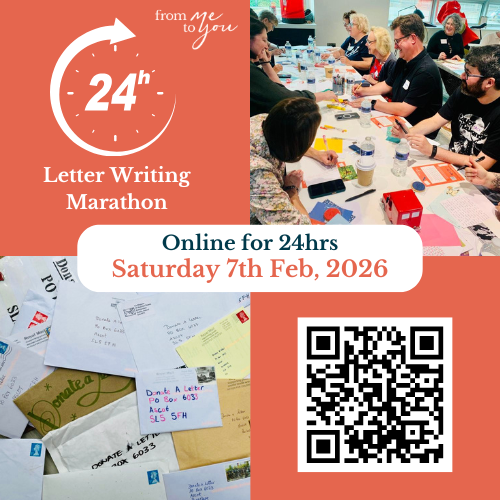
Coinciding with World Cancer Day 2026, the 24-hour Letter Writing Marathon, being held on 7th – 8th February will join together people from around the world to help keep people with cancer connected by writing and donating letters to its Donate A Letter programme.

By inspiring people to put pen to paper, From Me to You promotes the power of letters in creating connections and bringing comfort to friends, family or even complete strangers who are going through cancer. Last year the charity processed over 17,000 letters for cancer patients: brightening days across the UK and abroad.

Charity Manger, Harriet Marsh told That's Health: “Last year we hosted our first ever 24hr Letter Writing Marathon to mark World Cancer Day 2025 and it was a huge success, bringing writers together from 13 different countries and generating almost 1,000 letters to send to people facing cancer.

“This year we’d love it to be even bigger, so we’re inviting everyone – whether they are a regular writer, or complete novice, to get a free ticket and join us online to do something special for cancer patients who are feeling isolated. We’ll guide you through writing a letter during the event, so just bring a pen and paper and enjoy being part of something amazing”.

The free 24hr Letter Writing Marathon starts at 9am on Saturday 7th February until 9am on Sunday 8th February 2026; but people only need to join for one hour (or more if they like – one lady stayed on for the full 24hrs last year!). Writers can sign up for a free ticket for the 24hr Letter Writing Marathon here.

This year the charity is also hosting three in-person Letter Writing Workshops to support the online marathon. One at the IFS Cloud Cable Car experience in Greenwich, London, on Saturday 7th February (10am-4pm) – where for £10 people can get a ticket for a day of letter writing and travelling on the cable car for inspiration! Pre booking a ticket is essential. To get a ticket, visit https://buytickets.at/frommetoyou/2024904 or find the event on From Me to You’s website (on the workshops page).

The charity has two events at RHS Harlow Carr in Harrogate on Saturday 7th February to mark World Cancer Day and the 24hr Marathon too. One is 10am-12noon and the other is 1-3pm. Tickets are £10pp and include light refreshments, access to the gardens and a complimentary stationery box for everyone. Tickets are available by visiting From Me to You’s website www.frommetoyouletters.co.uk (on the workshops page) and clicking the event time you want to attend.

World Cancer Day highlights how people impacted by the disease are more than just a statistic; a message that is at the core of the work of From Me to You.

Anyone looking to donate or receive a letter can sign up at frommetoyouletters.co.uk.

Monday, 26 January 2026

Fortuna Female Society expands Woman:Kind Café to Runcorn

Fortuna Female Society has announced the expansion of its Woman:Kind Café service, extending provision into Runcorn from February 2026.

Woman:Kind Café is a confidential peer-support space for women affected by domestic abuse, past or present. Alongside peer support, the café provides signposting to other local support services in Halton. Fortuna Female Society can also refer women on to trauma-informed counselling sessions.

Woman:Kind Café already runs twice per month at Widnes Library. The new Runcorn sessions build on the existing service, extending access across the borough.

From February 2026, sessions will run as follows:

Runcorn: Halton Lea Library, every 1st and 3rd Monday of the month

Widnes: Widnes Library, continuing every 2nd and 4th Monday of the month

The expansion increases access while maintaining existing provision in Widnes.

Laura Bevan, Chair of Fortuna Female Society, told That's Health: “We are seeing a growing need for safe spaces where women can talk, be listened to, and be guided towards the right support when they need it. Expanding Woman:Kind Café into Runcorn allows us to meet that need more effectively across Halton."

Laura added: "Everything we do is rooted in our mission of creating safe spaces for women to connect, rise and thrive.”

Fortuna Female Society is a registered charity (Charity Number 1213200) working across Halton to create supportive spaces for women through a wide range of groups, activities, and support services. These include peer-support cafés, wellbeing sessions, creative activities, and opportunities for connection and confidence-building.

More information about Fortuna Female Society and its activities is available on its website at: https://fortunafemale.org

Monday, 19 January 2026

Enhancing Support for Families of Children with Life-Limiting Conditions in Greater Manchester

Kentown Support has launched a new partnership with Gaddum, a Greater Manchester based mental health and carers' charity, to strengthen services for families of babies, children, and young people living with life-limiting conditions across Greater Manchester.

As part of Kentown Support’s community-focused palliative and end-of-life care model, Gaddum will deliver a comprehensive programme of therapeutic counselling to parents, siblings, and wider family members through its Palliative and End-of-Life Therapy Service. 

Through this regional model, Gaddum will provide a dedicated service, offering open-ended counselling for families with a child receiving palliative or end-of-life care. Specialist bereavement support will also be available to help families process loss, sustain relationships and rebuild wellbeing during the most challenging times.

Dr Helena Dunbar, Chief Executive Officer of Kentown Support, told That's Health: “Our vision at Kentown Support is to ensure that every child and family living with a life-limiting condition can access community-based palliative care. 

"The Kentown Model, with support from various partners, brings together nursing, practical, and emotional support —ensuring care is seamless, compassionate, and close to home.”

The partnership will also provide age-appropriate therapeutic interventions for siblings, wellbeing sessions for Kentown’s Children’s Palliative Care Community Nurse Specialists, and improved access to emotional support across all ten Greater Manchester boroughs.

Together, Kentown Support and Gaddum are committed to ensuring families receive equitable, specialist care whenever and wherever they need it most.

Kentown Support was established in 2025 with the generous support of The Kentown Wizard Foundation. Their mission is to improve the provision of community palliative care for children and families across the UK. It is their belief that every child with a life-limiting condition, and their family,  should have access to a model of integrated community children’s palliative care, whenever and wherever they need it.

Kentown Support works to:

develop sustainable, high-quality community-based children’s palliative care teams

support and collaborate with healthcare professionals, local services, and community partners to create a more coordinated, accessible services

share and fund research and training resources to improve understanding, build knowledge and drive advancements in children’s palliative care

Find out more at: www.kentownsupport.org.uk

Gaddum is a mental health and carers charity that has provided counselling services and practical support to individuals and communities throughout Greater Manchester for almost 200 years.

Find out more at: www.gaddum.org.uk

Cost-Saving Shift to Social Prescribing Lacks Essential Safety Data for M.E.

As the UK government accelerates its national transition toward non-pharmacological treatments (NPTs) and social prescribing in 2026, social enterprise ME Foggy Dog is highlighting a critical lack of oversight regarding patient safety. 

While these community-based interventions are being promoted as a "personalised care" solution, the organisation warns that the shift is primarily driven by cost-saving measures rather than clinical safety data. 

Since 2020, the UK has seen a surge in M.E. (Myalgic Encephalomyelitis), Long Covid, and other post-viral conditions. In response, the 2026 policy direction leans heavily on "low-cost" alternatives to biomedical research and pharmaceutical interventions. 

However, ME Foggy Dog argues that this financial strategy overlooks the biological reality of energy-limiting conditions. "NPTs are being scaled nationally because they are inexpensive, not because they have been proven safe for the M.E. community," Sally Callow, Founder of ME Foggy Dog, told That's Health. 

"Biomedical research and specialist care require significant investment, but diverting patients toward community activities without clinical safeguards is a false economy that risks long-term health deterioration." 

Despite the rapid rollout of social prescribing, there remains no mandatory training for link workers or community providers regarding Post-Exertional Malaise (PEM), the core symptom that makes many physical or mental activities potentially harmful for M.E. patients.

Crucially, while patients have reported health setbacks through PALS and individual NHS clinics, there is still no national system to centrally record harms caused by non-medical interventions. This lack of data was highlighted during the 2021 NICE guideline review and remains unaddressed in 2026.

Through the Shake It Up campaign, ME Foggy Dog is calling for:

National transparency: The urgent creation of a national harm-reporting system to track the impact of NPTs.

Evidence-based policy: An end to ill-informed policymaking, ensuring that any expansion of social prescribing is informed by recorded patient outcomes.

"We are at a critical moment where policy is being built without a safety net," Callow continues. "If the government wants to expand these programmes, it must commit to tracking the consequences. We need influence, policy insight, and amplification to ensure the M.E. community is protected, not sidelined by budget-driven decisions."

Wednesday, 14 January 2026

How to Use the NHS Pharmacy First Service

The NHS Pharmacy First service is designed to make it quicker and easier to get treatment for common health conditions without needing a GP appointment. 

Available across England, Wales and Scotland it allows trained community pharmacists to assess, advise, and in some cases treat certain illnesses, often on the same day.

If you’ve been struggling to get a GP appointment or aren’t sure whether your symptoms need a doctor, Pharmacy First could be the ideal first step.

What Is NHS Pharmacy First?

Pharmacy First enables community pharmacists to provide NHS consultations for a range of common conditions. These consultations are free, and where appropriate, pharmacists can supply NHS-funded treatment rather than simply offering over-the-counter advice.

The aim is to:

Reduce pressure on GP surgeries and A&E

Help patients get faster access to care

Make better use of pharmacists’ clinical expertise

Conditions You Can Be Treated For

Under Pharmacy First, pharmacists can assess and treat several common conditions, including:

For adults

Sinusitis

Sore throat

Earache

Infected insect bites

Impetigo

Shingles (early presentation)

For women and girls

Uncomplicated urinary tract infections (UTIs)

The pharmacist will check symptoms carefully to ensure the condition is suitable for treatment under the service. If not, they’ll advise on the next best step — such as contacting your GP or NHS 111.

How to Access Pharmacy First

1. Walk into a Participating Pharmacy

You don’t need an appointment. Simply visit a local pharmacy offering the service and ask for a Pharmacy First consultation.

2. NHS Referral

You may also be referred by:

NHS 111

GP practices

Urgent care or A&E services

This helps direct patients to the right care setting quickly.

What Happens During the Consultation?

Pharmacy First consultations are carried out in a private consultation room. The pharmacist will:

Ask about your symptoms and medical history

Check how long symptoms have lasted

Assess whether treatment can be safely provided

Supply NHS medication if appropriate

Give clear self-care advice and safety-net guidance

If symptoms suggest something more serious, the pharmacist will refer you onwards promptly.

What Treatment Can Pharmacists Provide?

Depending on the condition, pharmacists may:

Supply prescription-only medicines under NHS protocols

Recommend appropriate self-care measures

Advise on pain relief, symptom management, and recovery times

Any treatment supplied through Pharmacy First is recorded on your NHS record, ensuring continuity of care.

Who Can Use Pharmacy First?

You can use the service if you:

Are registered with a GP in England

Have symptoms that fall within the service criteria

Meet the age and clinical requirements for the condition

There is no charge for the consultation, and normal NHS prescription charges apply where relevant (unless you are exempt).

When Pharmacy First Isn’t Appropriate

Pharmacy First is not suitable for:

Severe or worsening symptoms

Chest pain or breathing difficulties

Serious infections

Children outside the age limits for certain conditions

In these cases, pharmacists will direct you to urgent or emergency care.

Why Pharmacy First Matters

For many people, Pharmacy First means:

Faster access to treatment

Less time waiting for GP appointments

Expert advice close to home

Early intervention that can prevent complications

Community pharmacies are often open during evenings and weekends, making them one of the most accessible parts of the NHS.

The NHS Pharmacy First service is a practical, patient-friendly way to manage everyday health concerns. 

If you’re unwell and unsure where to turn, your local pharmacy could be the quickest route to reassurance and treatment — without adding pressure to GP services.

If in doubt, step into your nearest participating pharmacy and ask. Help may be closer than you think.

I must point out that my wife and I have used the NHS Pharmacy First Service on a number of occasions and have received wonderful help and support.