Showing posts with label blood. Show all posts

Wednesday, 25 February 2026

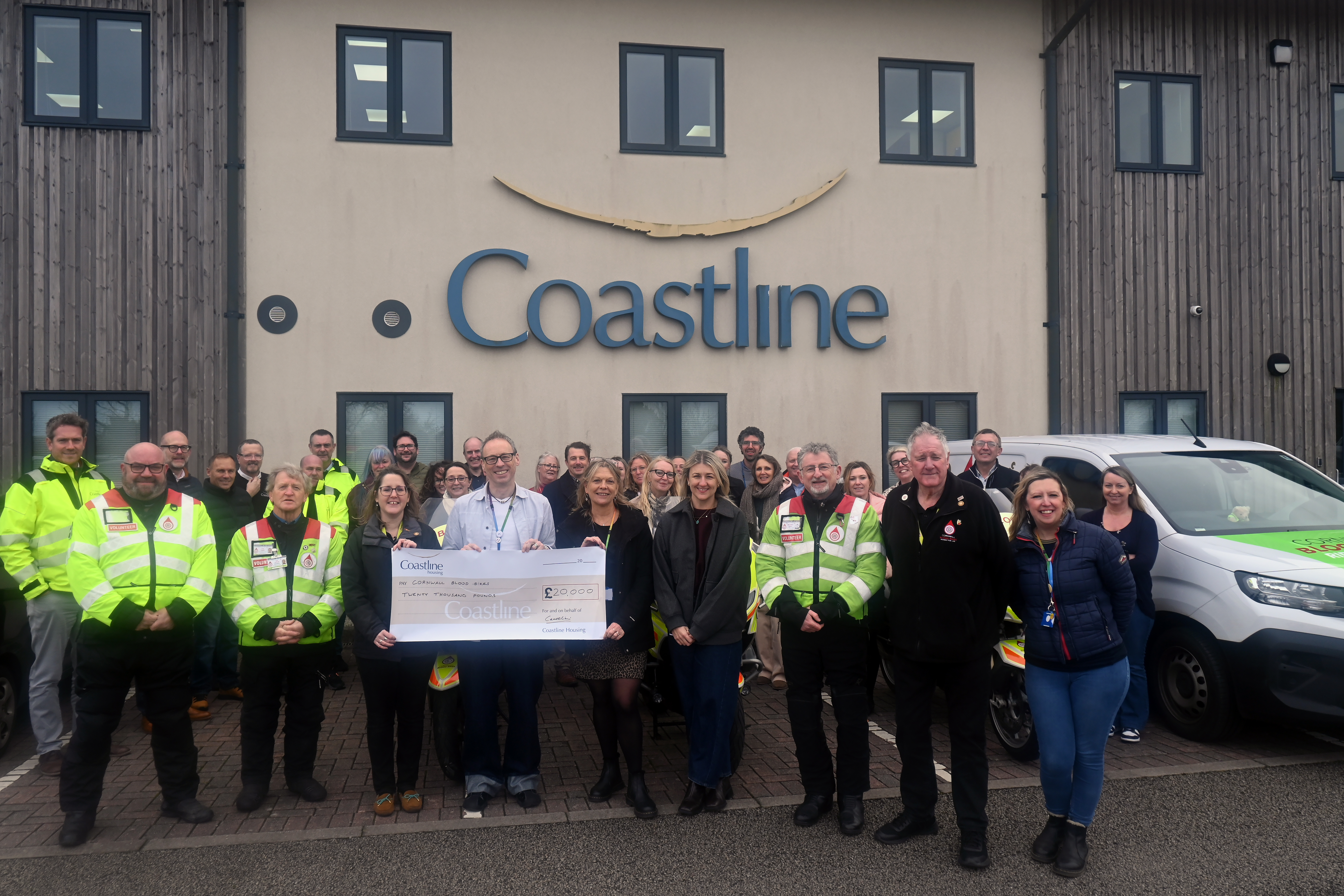
Local housing charity raises £20,000 for Cornwall Blood Bikes

Colleagues at Coastline Housing have presented £20,000 to Cornwall Blood Bikes to help the local charity in its lifesaving work.

The money is the result of a year’s worth of fundraising by colleagues at the Cornish housing charity and this year they raised a record amount.

CEO Allister Young, who was proud to help hand over the cheque, told That's Health: “Coastline colleagues clearly felt very passionately about Cornwall Blood Bikes to raise such a fantastic amount. 

"Any of us living in or visiting Cornwall never know when we might need the services of this fantastic charity and its hard-working volunteers so we’ve been proud to fundraise for them across the past 12 months.”

Colleagues at Coastline raised the funds thanks to a number of events including their big annual marathon challenge in September where colleagues between them clocked up just over 3,000 miles in one day and raised £5,128. 

Participants walked, ran and cycled the miles, and one small group of colleagues even did a special motorbike ride to add some miles to the total, in tribute to Cornwall Blood Bikes and the many miles volunteers cover each year.

Across the year, staff at Coastline also held events such as BBQs, a quiz night, raffle, big breakfasts and a VE day celebration.

Cornwall Blood Bikes is a volunteer-run charity providing a free, "out of hours" courier service for the NHS, transporting blood, plasma, urgent samples, medication, and donor breast milk between hospitals, hospices, and care homes. They operate weekday nights (5pm–7am) and 24 hours on weekends/bank holidays to save the NHS money on courier fees.

Jayne Penlerick, Chair of Cornwall Blood Bikes, told us: “We're really just blown away by this £20,000 donation. We are all volunteers and Cornwall Blood Bikes gets busier each year. 

"Last year the team undertook around 7,800 jobs and rode a total of around 244,000 miles doing so. We also celebrated our 10th anniversary. 

"We really wouldn’t be able to do any of this without people like the team at Coastline Housing who fundraise so hard for us. It means so much to be able to use this money to keep these bikes on the road for the people of Cornwall.”

Assistant Director of Finance at Coastline Zoe Field, who organised the Coastline charity marathon challenge, added: “Every year I think to myself that we won’t beat our previous total in terms of miles and money – but then we seem to manage it. I’m so proud of the way colleagues get involved and really push themselves to make a difference and we know this money will make a real difference to Cornwall Blood Bikes.”

https://www.coastlinehousing.co.uk

https://cornwallbloodbikes.org

Monday, 19 May 2025

The Importance of World Blood Cancer Day: Uniting for a Cure

Every year on 28th May, people across the globe come together to mark World Blood Cancer Day — a time to raise awareness, honour those affected, and inspire collective action against one of the most challenging types of cancer. 

While often overshadowed by more widely known forms of cancer, blood cancer impacts millions of individuals and families worldwide. World Blood Cancer Day serves as a powerful reminder that awareness, research, and donor registration can save lives.

What is Blood Cancer?

Blood cancer is an umbrella term for cancers that affect the blood, bone marrow, or lymphatic system. The three main types are:

Leukaemia – cancer of the blood or bone marrow, most commonly affecting white blood cells.

Lymphoma – cancer that begins in the lymphatic system.

Myeloma – cancer of plasma cells in the bone marrow.

These cancers can develop quickly or slowly and can affect people of all ages, from children to older adults. Despite medical advancements, many types of blood cancer remain difficult to treat, particularly when diagnosed in later stages.

Why Awareness Matters

One of the most significant challenges with blood cancer is early detection. Symptoms such as fatigue, frequent infections, bruising, or unexplained weight loss can be easily overlooked or misdiagnosed. By raising public awareness, World Blood Cancer Day helps people recognise potential warning signs and seek medical attention sooner.

Awareness also plays a vital role in destigmatising blood cancer. It opens up conversations, encourages fundraising for research, and drives advocacy for better patient support and treatment access.

The Role of Stem Cell and Bone Marrow Donors

A crucial aspect of fighting blood cancer is the need for stem cell donors. For many patients, a stem cell or bone marrow transplant is their only chance of survival. Yet, finding a matching donor — especially for patients from minority ethnic backgrounds — can be incredibly difficult.

World Blood Cancer Day is an opportunity to encourage people to register as donors with organisations like Anthony Nolan, DKMS UK, and the NHS Blood and Transplant Service. Joining the donor registry is quick and painless, and it could mean giving someone the gift of life.

Standing in Solidarity

The symbol of World Blood Cancer Day is a red ampersand (&), representing connection, unity, and hope. It reminds us that we are all connected — patients, families, healthcare workers, researchers, and supporters. When we unite, we create a force strong enough to challenge the odds and bring us closer to a cure.

How You Can Get Involved

Even small actions can make a significant impact. Here are a few ways to support World Blood Cancer Day:

Wear red on 28th May and share your support on social media using the hashtag #WorldBloodCancerDay

Register as a stem cell donor

Donate to organisations supporting blood cancer research and patient care

Host a fundraiser at work, school, or in your community

Share stories of those affected to help raise awareness and reduce stigma

Final Thoughts

World Blood Cancer Day isn’t just about one day of recognition — it’s about driving long-term change. With more awareness, greater donor participation, and continued investment in research, we can improve outcomes for those diagnosed with blood cancer and, ultimately, find a cure.

On 28th May, let’s wear red, speak out, and stand together. Because no one should have to face blood cancer alone.

https://www.anthonynolan.org/

https://www.dkms.org.uk

Wednesday, 1 May 2024

Why International Thalassaemia Day on 8th May is Crucial

Every year, on the 8th of May, the global community comes together to commemorate International Thalassaemia Day. This observance holds immense significance, shedding light on a genetic blood disorder that affects millions worldwide. As a British citizen, it's important to understand the gravity of this day and why raising awareness about thalassaemia is crucial.

Thalassaemia is a hereditary blood disorder characterised by abnormal haemoglobin production, leading to anaemia and other complications. Individuals with thalassaemia require lifelong medical care, including frequent blood transfusions and chelation therapy to manage iron overload. Without proper treatment, thalassaemia can severely impact quality of life and lead to life-threatening complications.

In the United Kingdom, thalassaemia is a significant health concern, particularly among communities with a high prevalence of the gene mutation. South Asian, Mediterranean, Middle Eastern, and African communities are disproportionately affected by thalassaemia, highlighting the importance of culturally sensitive healthcare approaches and targeted awareness campaigns.

International Thalassaemia Day serves as a platform to raise awareness about the challenges faced by individuals living with thalassaemia and their families. It provides an opportunity to educate the public about the importance of carrier screening, genetic counselling, and early diagnosis to prevent the transmission of the disease to future generations.

Furthermore, this day serves as a reminder of the need for equitable access to healthcare services and treatment options for all individuals affected by thalassaemia, regardless of their socio-economic background or geographical location. In the UK, efforts to improve access to specialized thalassaemia care and support services are ongoing, but there is still much work to be done to ensure that every individual receives the care they need.

Moreover, International Thalassaemia Day is a call to action for policymakers, healthcare professionals, and communities to collaborate in addressing the challenges associated with thalassaemia. This includes supporting research initiatives aimed at developing more effective treatments, raising funds for patient support programmes, and advocating for policies that prioritize the needs of individuals living with thalassaemia.

As we observe International Thalassaemia Day on the 8th of May, let us reaffirm our commitment to supporting those affected by thalassaemia and working towards a future where this disorder no longer poses a threat to individuals and families. 

By raising awareness, promoting education, and advocating for better healthcare resources, we can make a meaningful difference in the lives of millions of people worldwide. Together, we can ensure that every individual living with thalassaemia receives the care, support, and respect they deserve.

The charity for the condition in the UK is UKTS https://ukts.org/

Friday, 22 September 2023

Diabetics face critical medicine shortages as their drugs are snapped up for weight loss treatment

Many of Britain’s 4.3 million registered diabetics face a critical medication shortage as their treatments are snapped up by dieters trying the latest trend, weight loss jabs. A leading testing expert says the UK’s diabetes epidemic means key drugs should be saved for patients who critically depend on them.

‘Wonder’ weight loss drugs, such as Wegovy, have hit the headlines in recent weeks. They can help people shed 10%-15% of their bodyweight, largely by supressing their appetite. But some of these weight loss jabs are based on semaglutide, first developed for treating type 2 diabetes. This means the boom in demand for ‘magic bullet’ weight loss jabs is contributing to a major shortage in key diabetes medication, says a leading expert in the field.

Leading blood testing expert, Dr Avinash Hari Narayanan (MBChB), Clinical Lead at London Medical Laboratory, says: "There's now a global shortage of semaglutide-based drugs for treating diabetes. Key among these is Wegovy’s sister drug, Ozempic, used by the NHS as a treatment for managing blood glucose levels in people with type 2 diabetes, which accounts for 90% of all diabetes cases in the UK. This will result in both acute and chronic medical complications if left unmanaged."

He went on to say: "Both Wegovy and Ozempic are produced by the Danish pharmaceutical giant Novo Nordisk. The problem is that Ozempic has increasingly been prescribed off label (outside of its approved licence) for weight loss as an alternative to Wegovy. Now Novo Nordisk is warning of shortages of Ozempic stretching into 2025.

"Ozempic and Wegovy became a social media phenomenon earlier this year as a weight loss cure, with demand for semaglutide spiralling after celebrity endorsements. That’s not what Ozempic was intended for and has resulted in demand far outstripping supply. 

"Now Novo Nordisk’s official weight loss drug, Wegovy, is finally available in the UK on the NHS and as a private prescription. However, though this will relieve the demand on critical Ozempic stocks, supplies of all semaglutide-based treatments remain limited. Patients being treated for type 2 diabetes need to know that there are sufficient stocks of this treatment and, if not, patients need a plan to mitigate against supply disruptions.

"Novo Nordisk now has a market cap of $419.79bn, making it the world's 17th most valuable company.  Astonishingly, the market value of the Danish company has exceeded the size of Denmark’s domestic economy (£395.40bn). 

"We're keen for Novo Nordisk to continue concentrating on the production of vital diabetes treatments, over other semaglutide-based products. The company has stated that it will prioritise treatments for existing patients, rather than focusing on introducing new people to Wegovy weight loss treatments.

"We support Diabetes UK in urging clinicians to follow Department for Health and Social Care guidance, which states clinicians should not prescribe these drugs outside of their licensed use until the supply issues are rectified. 

"It’s not only in the UK restricted supplies are causing problems; there’s also a worldwide shortage. America’s FDA lists Wegovy and certain Ozempic dosages as being in short supply. So too does Australia’s Therapeutic Goods Administration (TGA), which says supplies of Ozempic will remain limited to diabetes treatments only until at least the end of December 2023, and that patients prescribed Ozempic for other conditions should contact their doctor to have their treatment reassessed.

"The shortage doesn’t only impact on semaglutide-based drugs. All “GLP-1 analogues”, as this family of drugs are known, are in short supply. These include the brands Ozempic, Rybelsus, Trulicity, Victoza, Saxenda, Byetta and Bydureon. This appears to be pan-market disruption, complicated by exceeding demands."

He went on to say: "‘All these drugs signal to your body to make more insulin (the hormone that controls the amount of sugar in your blood) reduce the amount of glucose (gluconeogenesis) that your liver makes, slow down the digestion of food, so that it takes longer for your body to absorb the sugar from meals, reduce your appetite by increasing satiety.

"It’s the final effect that's created this unexpected surge in demand. But, there's some welcome news of another GLP-1 analogue drug just about to reach the UK. The National Institute for Health and Care Excellence (NICE) has approved the use of tirzepatide (brand name Mounjaro) for treating type 2 diabetes in England and Wales. Supplies of this new drug should come on stream within three months.

"Again, it’s vital this new medication is prioritised as a further treatment for type 2 diabetes, rather than for any other purposes. It, too, is likely to be in hot demand by people seeking to lose weight the easy way. In the US, clinical weight loss trials show Mounjaro is even more effective than Ozempic, with patients achieving 26.6% weight loss over a period of 84 weeks.

"By 2030, diabetes cases in the UK will have risen by 50% compared against 2007 levels, according to Diabetes UK. Unmanaged or undiagnosed diabetes is one of the leading causes of death. Diabetes is usually linked to factors like weight, lifestyle, age and family history. 

"One in ten people will have diabetes by the end of the next decade, and one in three will be at a much increased risk of developing it. The truly frightening fact is that it's quite common for people to have diabetes and not be aware of it.

"Fortunately, there's a simple blood test that will categorically confirm whether or not you have type 2 diabetes, even in its earliest stages, long before any symptoms have developed. This home test checks your levels of HbA1c. 

"This biomarker is used to confirm whether you have (or are at risk of developing) diabetes. For anyone who already knows they have diabetes, regular HbA1c checks are also essential to monitor progress. 

"The London Medical Laboratory’s “Diabetes - Diagnosis and Monitoring test” can be taken at home via the mail, or at one of the many drop-in clinics that offer these tests across London and nationwide in over 95 selected pharmacies and health stores."

For full details visit https://www.londonmedicallaboratory.com/product/diabetes-check

Sunday, 19 February 2012

Former top user of insulin tells his story of how weight loss changed it all

A man who used to be Britain’s highest individual user of insulin told delegates at a study day in Liverpool recently how specialist weight loss surgery transformed his life.

Michael Parker, 49, who weighed 34 stone and was plagued by ill-health, is among 200 people nationwide who have all undergone a complex weight loss procedure known as the duodenal switch.

40 duodenal switch patients gathered together for the first time at an event organised by leading weight loss surgery information charity WLSinfo to share their experiences.

Speakers at the event included leading surgeons, including Professor David Kerrigan, who pioneered the duodenal switch operation in the UK. Also attending were patients and dieticians.

“The study day was for anyone who has had or is thinking of having the duodenal switch operation,” said Ken Clare, founder of WLSinfo.

“As a charity, we have many members the length and breadth of the British Isles who have had this procedure. We felt it would be a great opportunity to bring them together to talk about their experience and for potential patients to find out more.”

Designed to help the seriously obese lose weight by making the stomach smaller and diverting the course of the food eaten, the duodenal switch procedure works by reducing the calories being absorbed by the body.

“Before surgery, I had to take 600 units of insulin a day – 12 times the average amount,” says Michael Parker, one of several duodenal switch patients scheduled to address the gathering,

“Since having the operation, I have lost 19 stone, no longer need insulin, my blood sugar levels are normal and my blood pressure is down. I do not have any symptoms of diabetes that plagued me for almost seven years.”

Also speaking at the event was Michael Parker’s surgeon Professor David Kerrigan, medical director of weight loss surgery specialists Gravitas.

An early pioneer of duodenal switch surgery in the UK, Professor Kerrigan is the surgeon who advised the UK government on the NICE obesity guidelines currently in use.

Over the last nine years, he has performed the duodenal switch procedure on over 150 patients, many of whom attended the event.

At the study day, Professor Kerrigan outlined the history of the operation, its results and describe how – for the right patient – the results can be excellent.

Also attending the event will be specialist dieticians who will speak on nutrition, blood monitoring and the importance of aftercare.

Sunday, 15 May 2011

Testing... Testing...

When times change, we must change with them. Now we have easy to use, portable blood test machines to help us control our diabetes. But more than the actual mechanics of just doing a test, there is little point unless we know what to do with the information you gain as a result.

It can be hard to remember sometimes, but you are more than just a number! With the arrival of the capacity for people with diabetes to do daily blood testing, it might seem that you spend your life looking at little screens with numbers on that seem to judge you on a small but often stressful way.

Be in no doubt, the ability to do your own tests (to self-monitor your blood glucose levels) is a very important tool in your own self-management. But as machines get cleverer and do more things for you, it's possible to feel a little left behind. More to the point, if all you see are 'bad numbers', then it's very hard to keep up the motivation to keep testing.

Not all diabetics are encouraged to test, but there are some clear guidelines laid down. Put simply, diabetics on insulin should be testing daily, while Type 2 diabetics need not test unless they want to or there is a good reason for them to do so. Some people are encouraged not to test, and I even hear stories about (and have experienced myself) doctors suggesting that someone with diabetes reduce how often they test order to save the NHS some money.

In March 2010 NHS Diabetes published a report on self-monitoring of blood glucose (SMBG) for people with Type 2 diabetes which stated, "The data from clinical trials show that in patients treated by lifestyle modification or oral agents, SMBG with appropriate education and clear objectives leads to an improvement in blood glucose control. The improvements in blood glucose control when SMBG is used without education and clear objectives are so small as to be of doubtful clinical benefit."

In keeping with the recommendations contained within NICE Clinical Guideline, it was suggested that SMBG should only be provided routinely to people with Type 2 diabetes not treated with insulin or sulphonylureas (pill meditation such as Metformin) where there is an agreed purpose or goal to testing and that "Individuals with non-insulin treated diabetes who are motivated by SMBG activity and use the information to maximise the effect of lifestyle and medication should be encouraged to continue to monitor."

NICE also recommended that people with Type 2 diabetes should expect to have their long-term glucose control checked every 2-6 months - this HbA1c result will give an indication of the overall blood glucose level over previous months [see additional info on HbA1c on p.11].

The report also acknowledged that patients should be shown how to interpret their results and how to use these results to make any appropriate lifestyle changes, "This has the potential to improve both the quality and the efficiency of blood glucose self-monitoring." By Sue Marshal.

Dr William Polonksy was the principal investigator of the Structured Testing Program study (STeP) the results of which were published in February 2011 in Diabetes Care.

He comments, "The HbA1c has been perceived as the gold standard for monitoring glycaemic control for a long time, but it does not provide information about the peaks and troughs in blood glucose levels during the day."

The STeP study used 12 months of data based on using SMBG (the self-monitoring of blood glucose), which is an established part of therapy for diabetics on insulin but in this case was applied to people with Type 2 not on insulin (but who may have been on other medications). They were asked to test several times a day for three days only. Then they repeated this activity each month, with a review with their doctor of the results every three months.

ONE STEP AHEAD "Diabetes and its resulting secondary complications are a significant and growing burden on individuals, society and national healthcare system," says Polonsky, "At the same time, healthcare budgets for individual care are being continually eroded. We must therefore redefine our strategies for management diabetes and use the available resources more effectively."

He points out that one of the best ways is more blood testing with well-designed data capture, "Blood glucose data should provide immediate feedback about the effects of food choices, activity, and medication on glycaemic control. It is crucial for people with diabetes to understand the close link between their lifestyles and behaviour and their metabolic responses. Most of the participants in the STeP study agreed that seeing how their behaviour actually affected their blood sugars motivated them to take on more responsibility for their condition and to change their lifestyle."

The other side of the fence is the experience of the healthcare professionals (HCPs, whether doctors or nurses). It's known that 90% of doctors do not download blood test data. Clearly, blood testing needs to be easy to do and to review, for both patients and HCPs. The STeP study showed that most of the physicians welcomed these changes in patient behaviour and found that their patients were more willing to participate in managing their condition. Says Polonsky, "As patients became more acquainted with using the meters they found that the tool actually reduced consultation time. Most of the physicians found that the detailed profiles gave them a better sense of how and what medication to prescribe."

Dr Satish Garg, also involved in the study, notes that, "the global diabetes epidemic requires immediate action. At present, some 50% of those people currently diagnosed with Type 2 diabetes fail to effectively manage their blood glucose levels. Looking at HbA1c is not enough as it shows only long-term glycaemic control over three months and doesn't reflect the important daily (and hourly) fluctuations.

It does not demonstrate to people with diabetes when and they their blood glucose values rise or fall, and it does not tell them how to react in order to correct them." For the healthcare system he says, "Structured SMBG also gives healthcare professionals the accurate data they need to recommend effective therapy changes.

Whereas a high HbA1c value merely indicates that a change in therapy is needed, structured SMBG instructs HCPs exactly what changes to make." Lat est result s Speaking on behalf of Roche, which sponsored the study, Franz Walt says, "For the patient, the focus must be on individual diabetes management; for the doctor, on the effective therapy management based on accurate information and data.

“Taking responsibility for their own therapy is a cornerstone in modern diabetes therapy, and blood glucose values obtained by the patient according to the structured testing concept form the foundation for the essential and information doctor-patient dialogue." Being able to discuss data might also help you address what could be termed 'clinical inertia' - when it's agreed, 'let's not do anything at the moment'. It's not just the testing, but the quality of what you DO with it.

If you can see the impact of behaviour or medication on your blood test results then you're more likely to keep to the programme.

LIVING › seeing how their behaviour actually affected their blood sugars motivated them to take on more responsibility for their condition and to change their lifestyle Dr. W. Polonsky There are two issues regarding blood testing for people with type 2 diabetes.

First is access to strips on prescription.

Because strips are seen as costly, and with the NHS facing cuts (as always), strips for Type 2s have been targeted as a way of cutting back. That means that people who want to test are being held back from doing so.

Second is a bizarre belief that because blood testing can be unpleasant (apparently) and that people might find it hard to do, that they need not bother.

OK, so not many people WANT to stab themselves in the finger, no matter what the reason, so Type 2s can be forgiven for not 'wanting' to, but that does not mean that they shouldn't.

There's several pharmaceutical companies looking to help Type 2s test more, and a few online pharmacies that have spotted the trend who are offering simple, cost-effective meters and strips so that you can buy them if you want them and forego the hassle of dealing with an unyielding GP.

Among the many blood test meters out there, some are aimed at those with Type 2 diabetes with some added features for those who test infrequently or who do not have to use carb-counting to help control their condition.

For example, the OneTouch VITA from Lifescan (http://bit.ly/Lifescan_Vita) can help users link the effects of food to their blood glucose level. It is particularly recommended for Type 2 diabetics on insulin as it can also help to show how food choices affect their blood glucose levels. Increased awareness of this on the part of the patient should lead to greater control of their diabetes.

Among the meters and strips that are more easily available online are those for the Wavesense Jazz (www.arcticmedical.co.uk) and IME-DC meter (http://bit.ly/Desang_IME-DC). Other meters are widely available from chemists - you can chat to your pharmacist about costs per pot of sensors. A very rough guide is about 70p per strip. Yes, that adds up if you're testing five times a day, seven days a week - that's two pots of 25 strips every two weeks. But if you're testing once a day for three days a week, then you might think it a seriously good investment in your longterm health.

● People don't blood test because they (often understandably) don't see the point of doing it. As Polonsky explains the results, "We not only saw improvements in blood glucose control but in well-being too. Those who tested understood the numbers, felt their interaction with their GP was useful and generally felt less stressed about having diabetes. They could perceive the usefulness of treatment as they saw evidence that the changes were making a difference." That's the point.

● CONTRIBUTORS

Dr. William Polonsky, Associate Clinical Professor in Psychiatry, University of California. Author of Diabetes Burnout: What to do when you can't take it anymore. Founder of the Behavioral Diabetes Institute www.behavioraldiabetes.org STeP study was sponsored by Roche and utilised the Accu-Chek 360 view tool.

Dr. Satish Garg, Professor of Medicine and Paediatrics, Young Adult Clinic Barbara Davis Centre for Diabetes, University of Colorado School of Medicine. Editor-in-chief of Diabetes Technology and Therapeutics.

Sunday, 8 May 2011

Garlic - a recommended natural step in the fight against heart disease

Following the publication of research from the Wolfson Institute at Barts Hospital and The London School of Medicine and Dentistry stating that offering treatment for heart disease to all those over 55 with statins and blood pressure pills would achieve the same results as screening through tests like blood pressure or cholesterol.

Dr Hilary Jones comments, “Professor Nicholas Wald’s report sets the age of 55 as the main predictor of heart disease. It is very important to also look at each individual patient’s circumstance and to consider the well publicised risk factors – overweight, blood pressure, diabetes and smoking. There is also a real concern over side effects: Indigestion, muscle pain and flatulence.

"These side effects are common and probably underestimated and it is thought you would have to treat a 100 people with statins to save just two lives. Undoubtedly there will be benefits for a few but many would experience unpleasant adverse reactions unnecessarily. Nor would it be desirable to abandon screening for high risk patients under 55 either.

"My recommendation is to consider lifestyle changes including lowering stress, getting enough sleep, exercising regularly, and adopting a healthy eating regime. Simple steps, such as including garlic in your daily routine has to be a better option than having half the population taking unnecessary pharmaceuticals,” comments Dr Hilary Jones. Other experts also acknowledge the circulatory benefits of garlic supplements.

Which Garlic Supplement to use?

Almost every clinical trial has shown that garlic extracts support heart health. That’s because the proven key compound, allicin, is only found in fresh and dried garlic.

Kwai is the original dried garlic supplement . Over 30 independent clinical studies and 190 published scientific papers show that it supports cardiovascular health.It provides the powerful benefits of garlic—without the smell.

Kwai’s suggested daily dose provides 1800mg of allicin — garlic’s most beneficial compound.

The Kwai garlic tablet features an inner core consisting of exclusive LI 111 pure garlic clove powder which undergoes analytical testing to assure the release of allicin, garlic's most beneficial compound.

Kwai's special coating ensures the freshness and intensity of the garlic and protects against odour.